
Putting a Free Jazz Festival’s Lineup Back on Stage
Brass City Jazz Fest is a free, Billboard-charting night of jazz in Downtown Waterbury. Its website was hiding the two things that keep it free: the lineup people come for, and the sponsors who pay for it. So we rebuilt it.
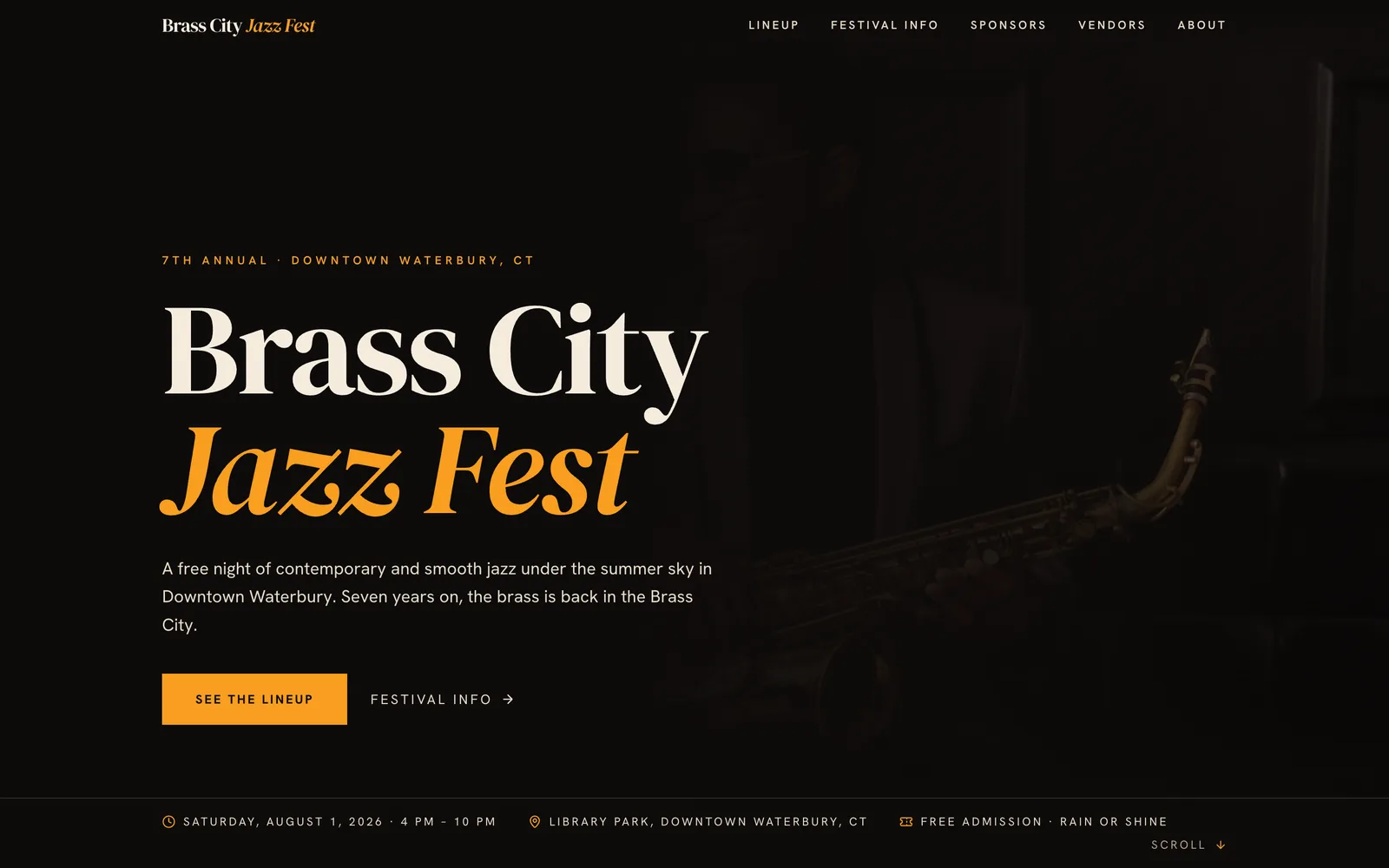 Rebuilt
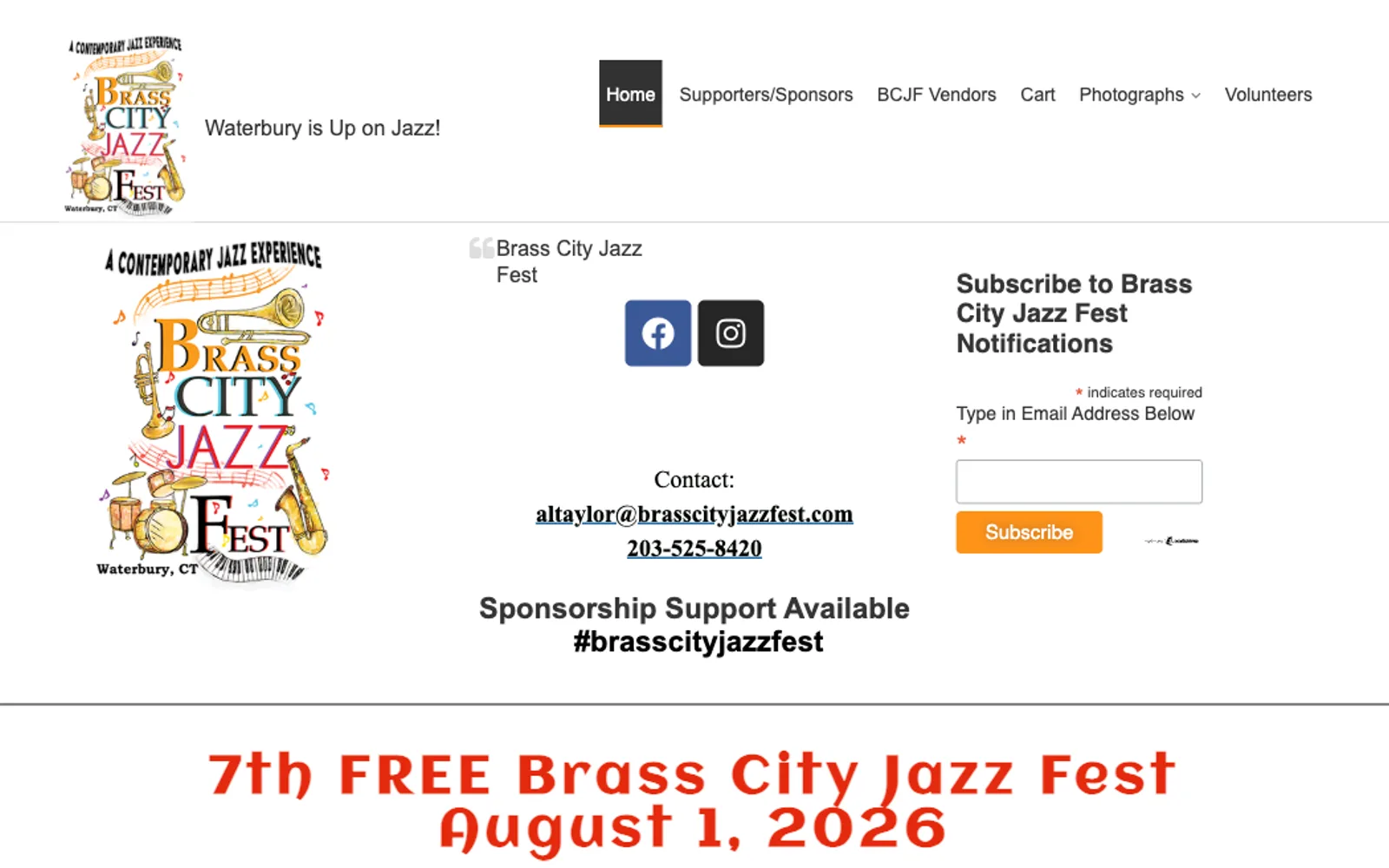 WordPress
A Free Festival Has Two Jobs for Its Website
When admission is free, the website is not a ticket page. It has two jobs, and they pay for each other. It has to make someone want to show up, and for a festival booking #1 Billboard artists, the way you do that is by putting the lineup out front. And it has to make the sponsors who fund the whole thing look good, because next year’s festival depends on them coming back.
The old site did neither. The lineup was buried and the sponsors’ page was broken.
What the Old Site Was Costing Them
The site ran on a generic WordPress theme, and it was quietly working against the festival. We graded it against The Full Score, our six-pillar standard. It came back a 62, a D. The gaps were not cosmetic:
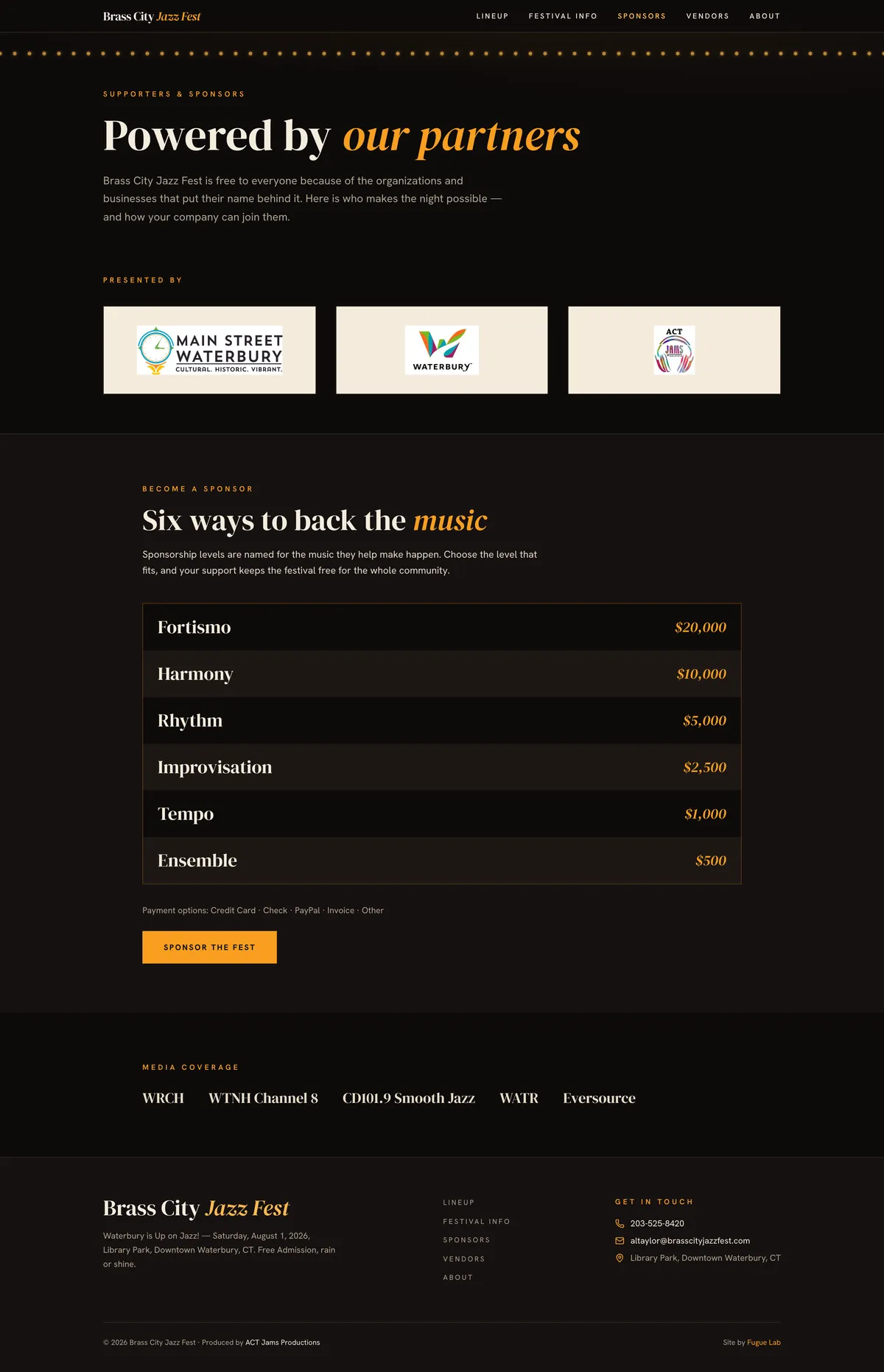
- The Sponsors & Supporters page was broken, it threw a server error and would not load at all. The companies paying to keep the festival free were paying for a page no one could open.
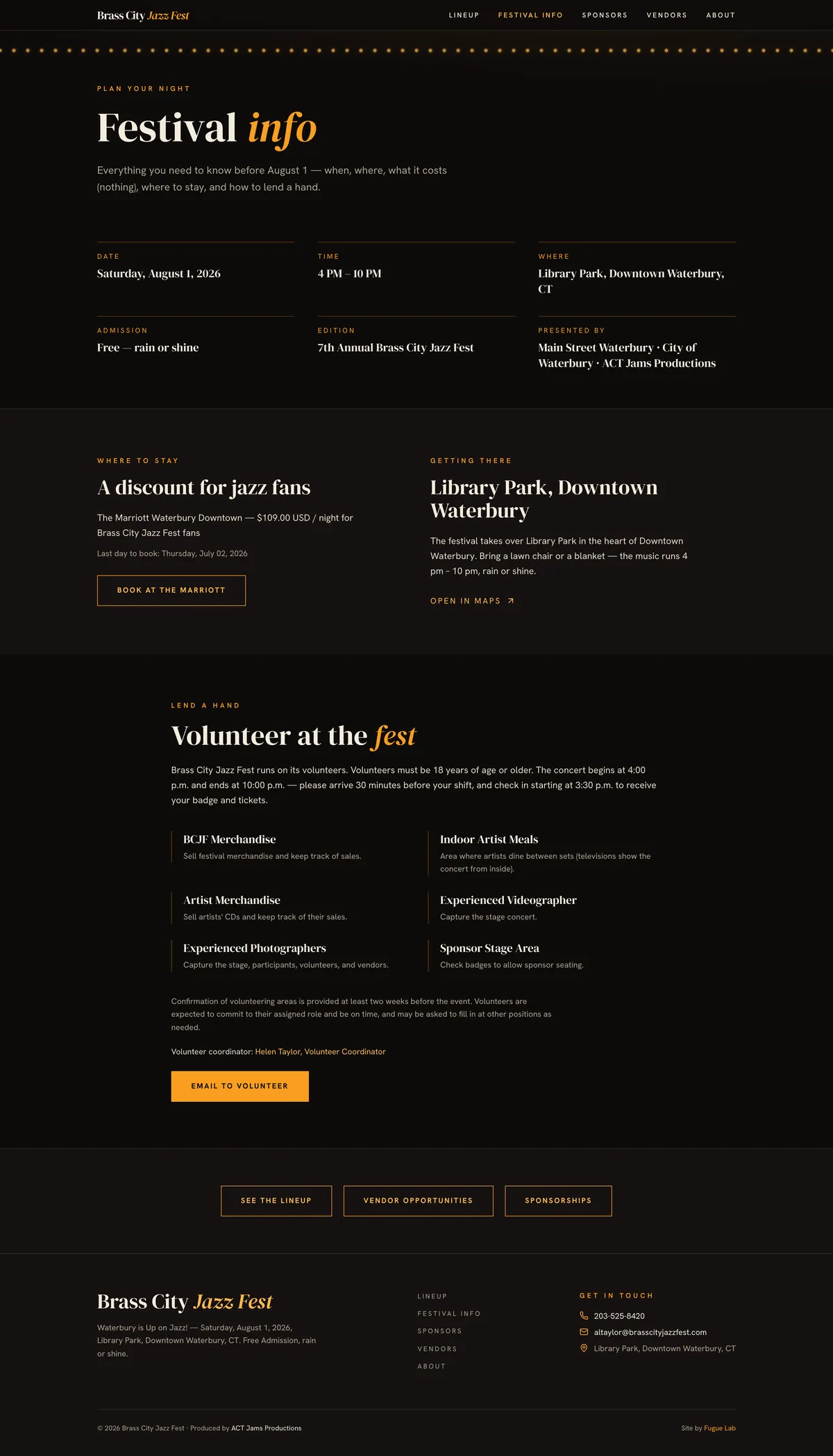
- There was no About page and no Contact page: both 404, not even in the sitemap. A seven-year-old festival with nowhere to tell its story or take a question.
- The homepage led with a SoundCloud embed, not the artists. The 2026 lineup was hard to find behind last year’s content.
- Search engines barely understood the site: it scored 60 on SEO, so a family Googling “jazz festival Waterbury” might never land on it.
The Rebuild
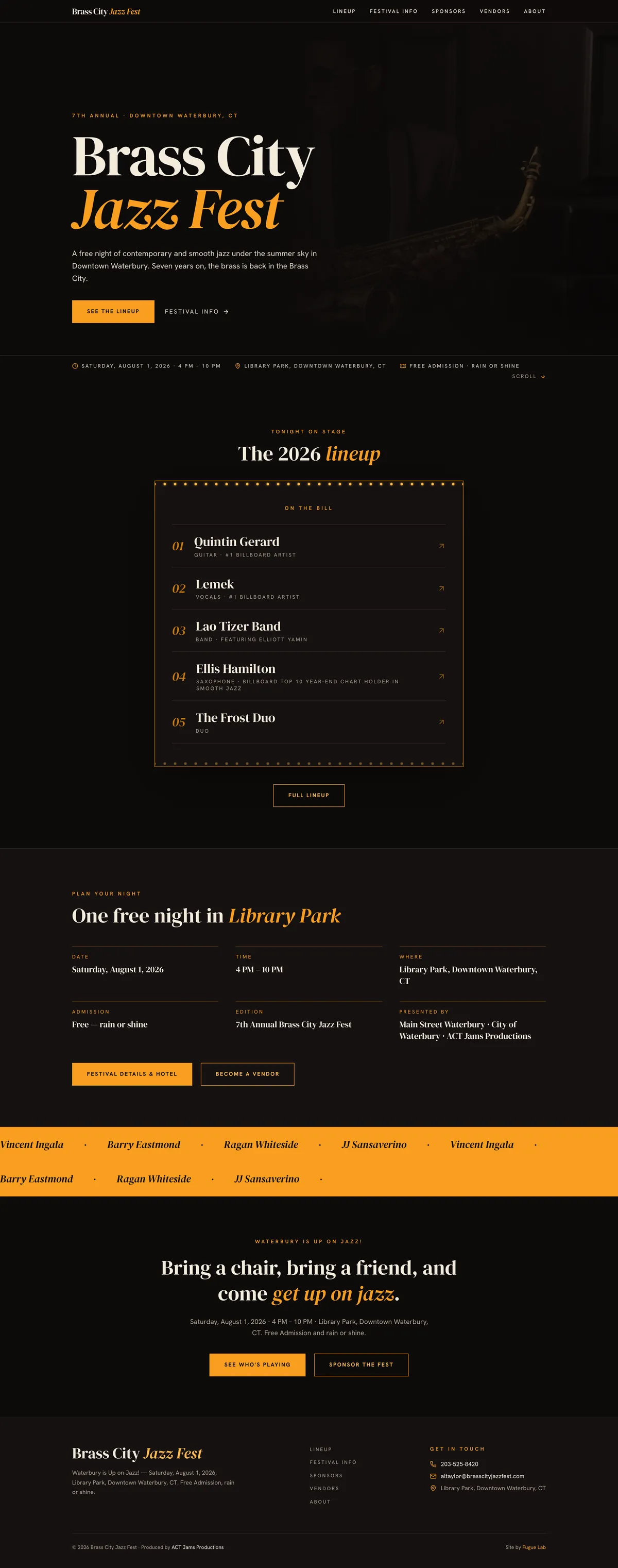
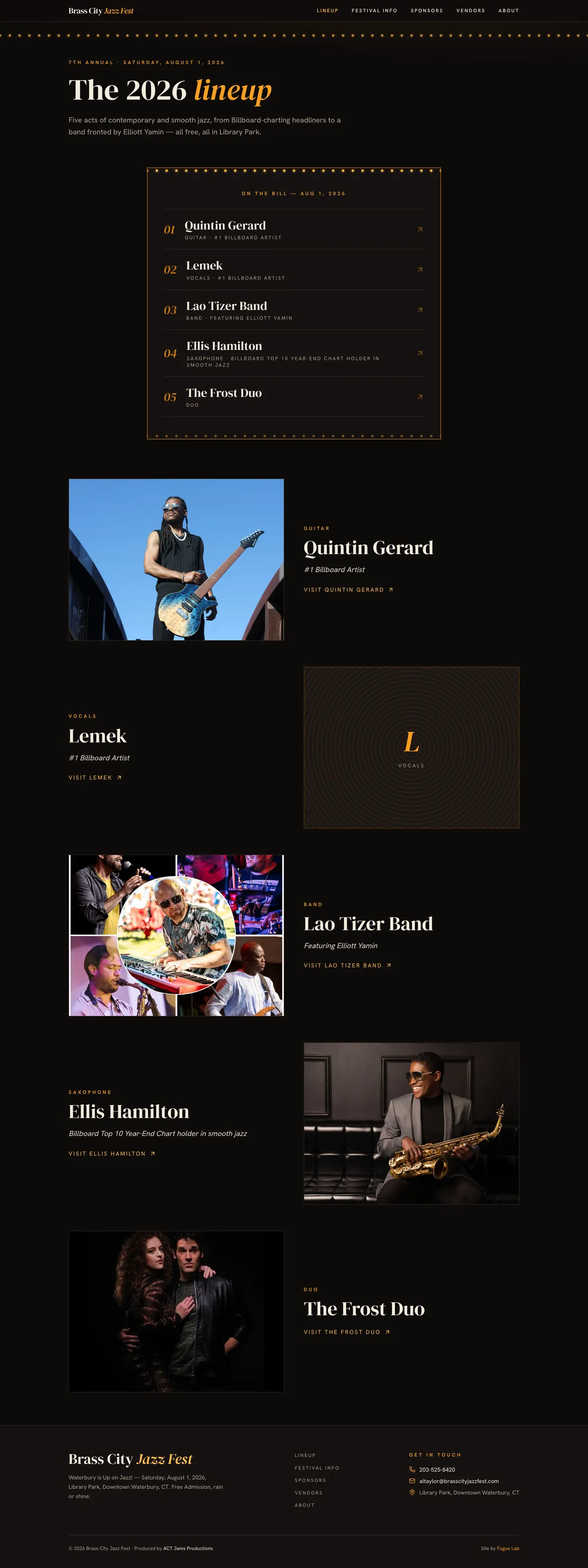
We kept every real fact (the dates, the billings, the sponsors, the hotel block) and rebuilt the experience around the lineup. The festival’s brass-and-midnight palette became the whole mood: a cinematic photo of headliner Ellis Hamilton, the name set in marquee type, and the artists billed like a venue’s “tonight on stage” board.
And the pages that used to be broken or missing now do their jobs. Scroll each to see the whole page:
It is a custom static build: fast, owned outright, nothing to patch every month. The kind of site you can hand to a sponsor without wincing.
The Difference, Measured
We ran the rebuild back through the same Full Score checker. The site went from a 62 to a 94, a D to an A, with the things that decide whether a free event fills a park, search and speed and the phone experience, at or near perfect, and the broken pages back to life.
62 → 94
Full Score, a D to an A
60 → 100
Search visibility, now easy to find
Broken → live
The sponsors page loads again
We hold our own work to the same standard. The checker flagged real contrast problems on our first pass, the footer copy and the lineup text were too faint, so we fixed them. That is the whole point of grading against a standard: it catches the gaps on our sites as readily as on anyone else’s.
What This Means for Your Festival
Most festivals are not losing attendance because their website is ugly. They are losing it because the site is slow, hard to find in search, and broken in the exact places that matter, the lineup that draws the crowd, the sponsor page that funds the day. The thing you exist to put on stage ends up buried three clicks deep.
The fix is not a new coat of paint. It is pointing the site at the one or two things you actually need it to do, making it fast and findable, and getting the broken pieces working again. We grade honestly against a standard, fix the gaps that matter, and put the music back out front.
Want to See Your Own Full Score?
We grade your current site against the same six pillars and hand you the list of gaps, whether or not you ever hire us. If the gaps are worth fixing, we can rebuild it the way we did for Brass City Jazz Fest.
About the Author
Garrett John Law is a software engineer and musician who builds digital platforms for festivals, schools, and arts organizations. He’s an Interlochen alum and CIM graduate, and the founder of Fugue Lab, where he rebuilds the websites music organizations rely on to fill the room.