
How We Moved a Church Off WordPress Without Touching Their Email
Holy Trinity Covina needed people to find service times, find the music program, and sign up to sing. The website was getting in the way. Here is how we rebuilt it.
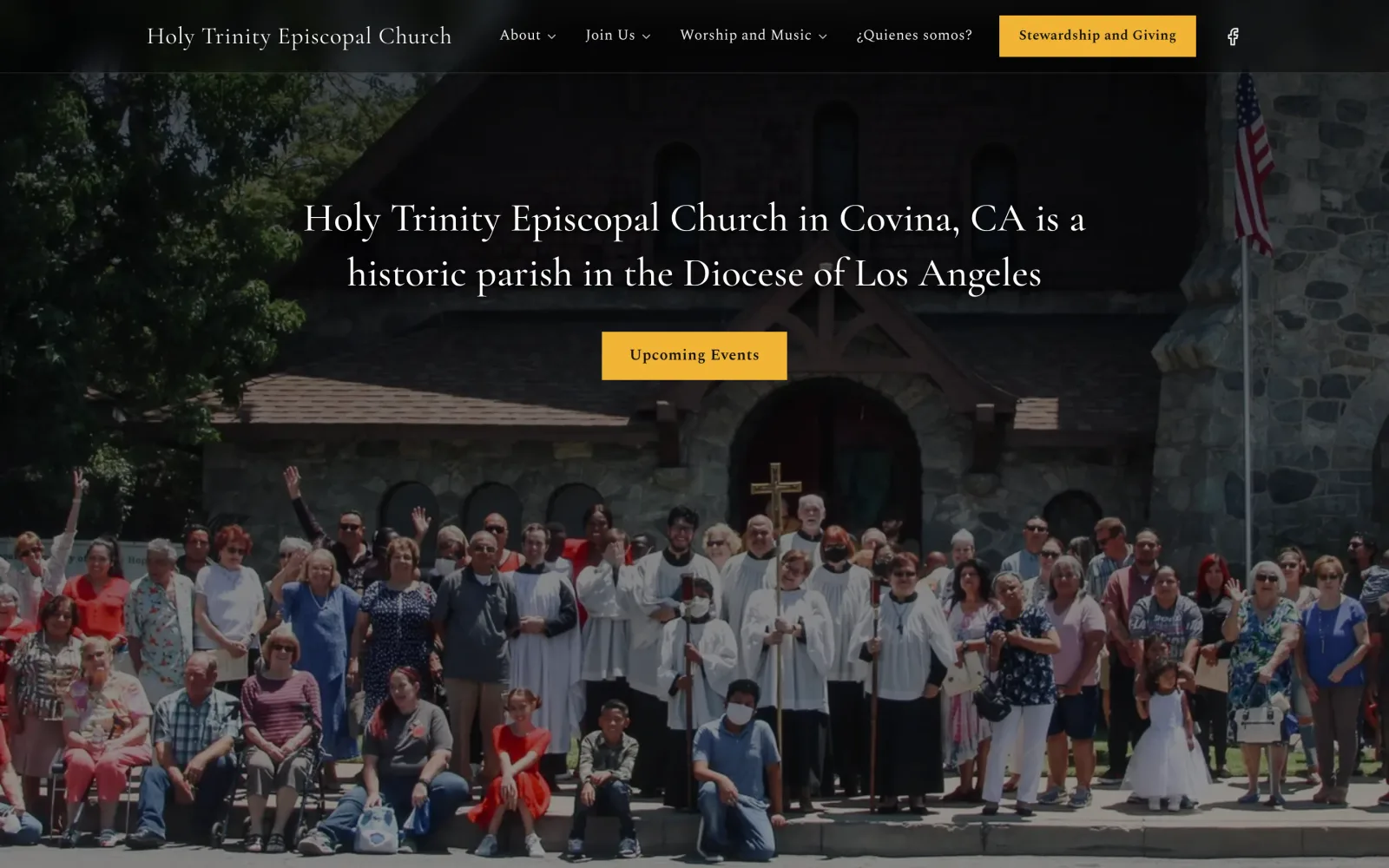 Rebuilt
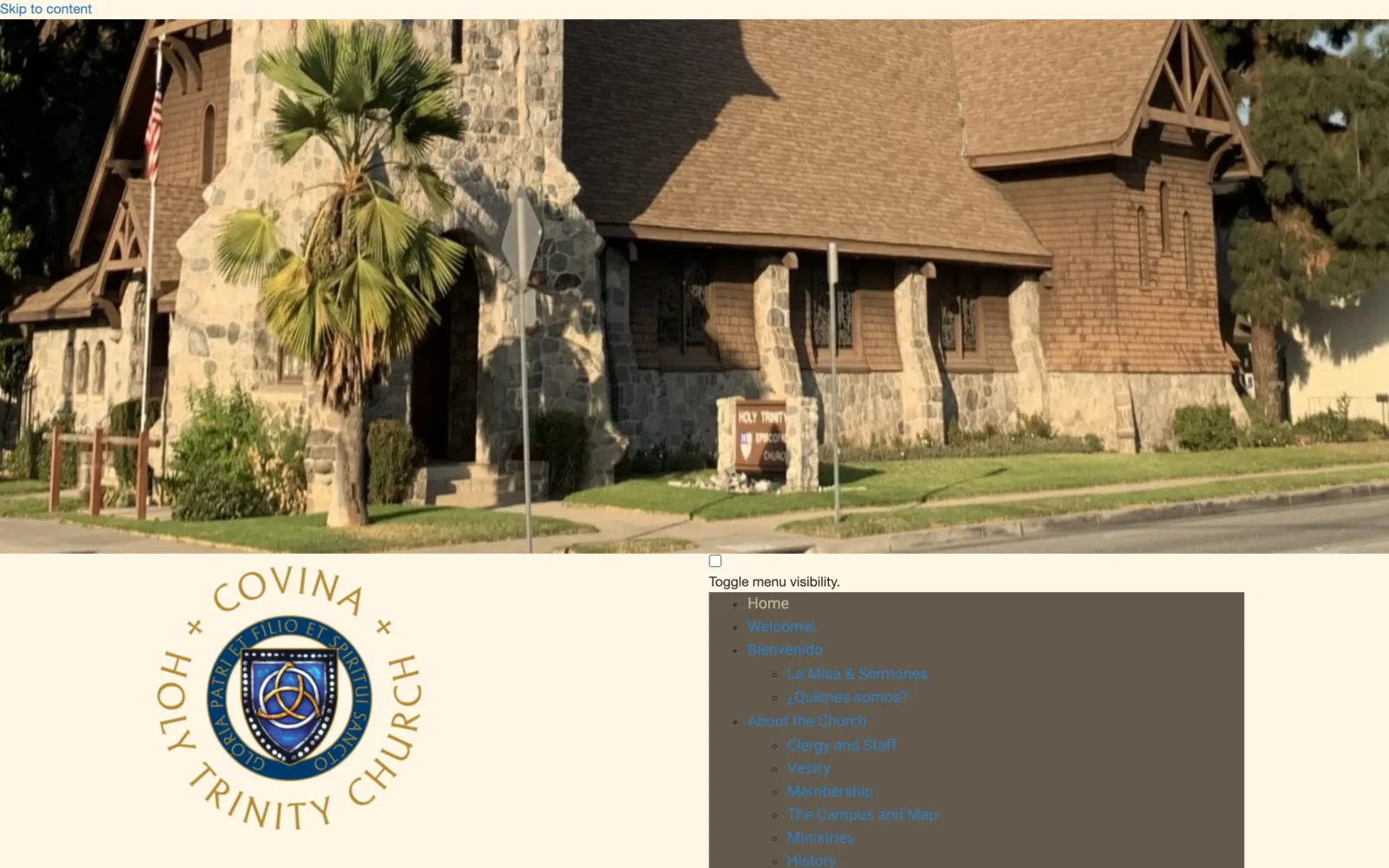 WordPress
Start With the Goal, Not the Website
Full disclosure: this is the parish where I serve as organist and choirmaster, so I see the website from both sides. I know what visitors are looking for, and I know what the staff dreads touching.
A church website has a short list of jobs. For Holy Trinity, the real ones were:
- A newcomer can find when services are and what to expect before they walk in.
- Someone who loves to sing can figure out how to join a choir.
- The office can update a time or an event without calling for help.
- None of it puts the parish email at risk.
That last one matters more than it sounds. The website and the email both run off the same domain, and a church that loses its email for a day loses its connection to the congregation. So the goal was never “a prettier site.” It was a site that does those four jobs and stays out of everyone's way.
What WordPress Was Costing Them
The old site ran on WordPress for years. It worked, in the sense that it loaded and had pages. But it was quietly failing at the jobs above.
The music program was buried. The choirs were spread across pages that nobody updated because updating them meant fighting the editor. Service times lived in a block that looked different from everything around it. And every month there was a bill for the privilege of all this.
The bigger problem was ownership. The content lived inside a platform and a pile of plugins. If you ever wanted to leave, you took screenshots and started over. The parish did not own its own site in any real sense. It rented one.
We Graded It Against The Full Score
Before rebuilding anything, we run the site through The Full Score, our six-pillar standard for whether a website actually performs: Brand & Design, Message & Persuasion, Technical Foundation, Integrations & Workflow, Maintainability & Ownership, and Conversion & Growth.
The point is not the letter grade. The point is the list of gaps, because the gaps are the work. For Holy Trinity the gaps were clear: a Technical Foundation dragged down by a slow, heavy template, a music program with no real funnel to join, and an Ownership problem baked into the platform itself.
The Build
A static site they actually own
We rebuilt the site as a custom React build, hosted as static files on S3 behind CloudFront. No platform subscription, no plugins to patch, no editor fighting you, no lock-in. The hosting bill for a site like this is pennies a month instead of WordPress hosting plus a stack of plugins. The content is the parish's, in their repository, forever.
The cutover that did not touch email
This was the part that had to be exactly right. The parish email runs on the same domain as the website. A normal migration moves the whole domain and prays the email records survive.
We did it differently. DNS stayed where it was, at the existing provider, so the email records never moved. We pointed only the www address at the new CloudFront site and set the bare domain to redirect to it. The website changed. The mail kept flowing the entire time. Zero downtime, zero risk to the inbox.
One place to sign up to sing
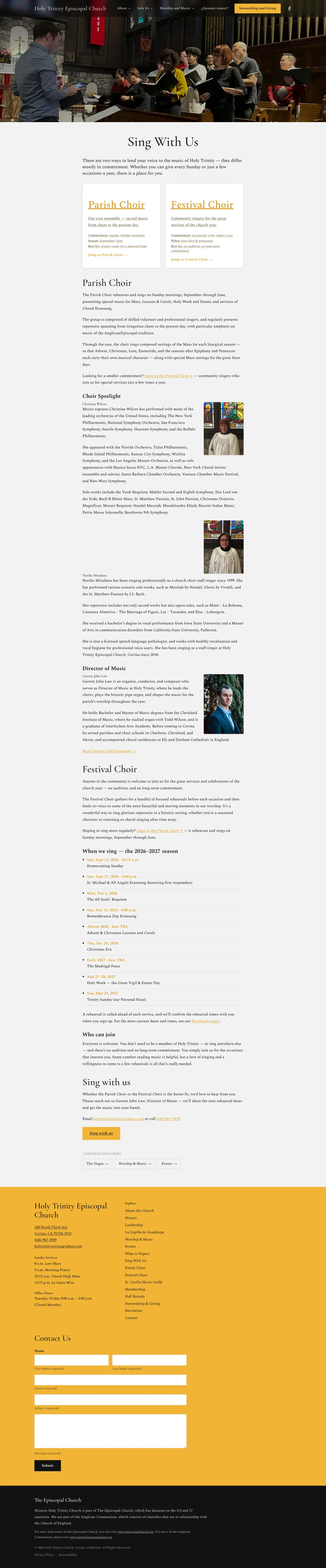
The choirs used to be scattered. We built a single “Sing With Us” page that brings them together, explains who each group is for, and gives an interested singer one clear next step instead of a scavenger hunt. That is the Conversion & Growth pillar in practice: a real funnel for the thing the music program most needs, which is people.
Contact that comes from the church
The contact form sends through Amazon SES from the church's own domain, so messages look like they come from the parish, not from a third-party form vendor. Small detail, but it is the difference between a site that feels owned and one that feels rented.
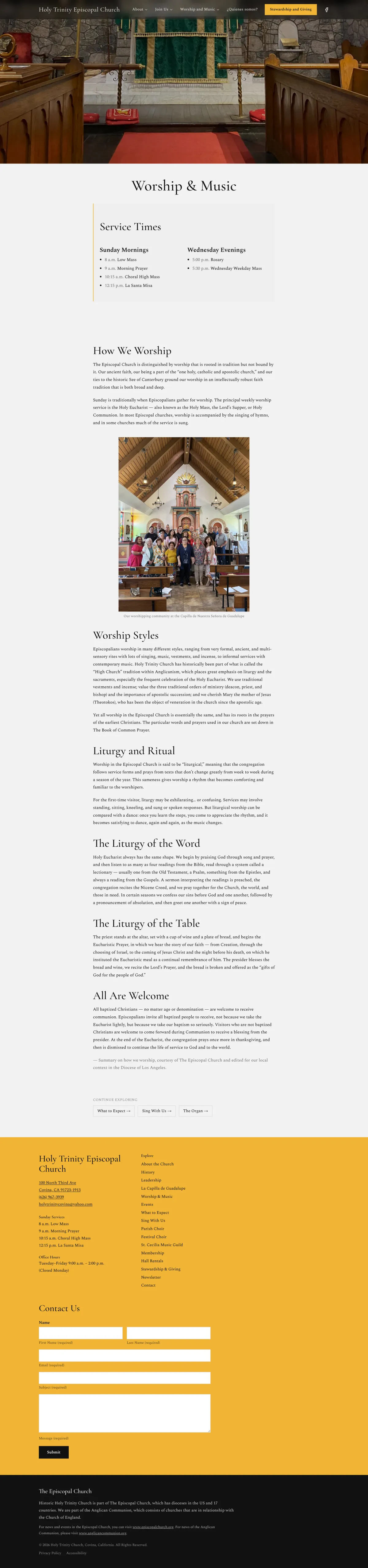
A few pages from the new site, top to bottom (scroll each to see the whole page):

The Result
The new site went live on holytrinitycovina.com in June 2026. We ran it back through the same Full Score checker. It scores 96 out of 100, an A, with perfect marks on performance, accessibility, mobile, and structured data. Those are the pillars that decide whether people can find you, load you fast, and use you on any device.
96/100
Full Score grade (A)
100
Performance, a11y & mobile
0 min
Email downtime in the cutover
The parish stopped paying a monthly platform fee. The office can update content without dreading it. And the choirs finally have one front door for anyone who wants to walk in and sing.
What This Means for Your Organization
Most music organizations are not failing because their website is ugly. They are failing because the site is slow, hard to update, and rented from a platform that owns their content. The music program, the thing the organization exists for, ends up buried three clicks deep.
A rebuild is not about a new coat of paint. It is about owning your site, making it fast, and pointing it at the one or two things you actually need it to do. For a church that is people in the pews and people in the choir. For a festival it is applicants. The method is the same: grade honestly against a standard, fix the gaps that matter, and keep the lights on while you do it.
Want to See Your Own Full Score?
We grade your current site against the same six pillars and hand you the list of gaps, whether or not you ever hire us. If the gaps are worth fixing, we can rebuild it the way we did for Holy Trinity.
About the Author
Garrett John Law is a software engineer and musician who builds digital platforms for festivals, schools, and arts organizations. He's an Interlochen alum and CIM graduate, currently serving as organist and choirmaster at Holy Trinity Episcopal Church in Covina, the parish in this case study.