
A Choir That Sang for Presidents, Hidden Behind “Under Construction”
The Wendell P. Whalum Community Chorus has sung at a presidential inauguration, for Nelson Mandela, at the 1996 Olympics, and at Carnegie Hall. None of that reached anyone who looked the chorus up online, because the front door said the site was under construction. So we rebuilt it around the history.
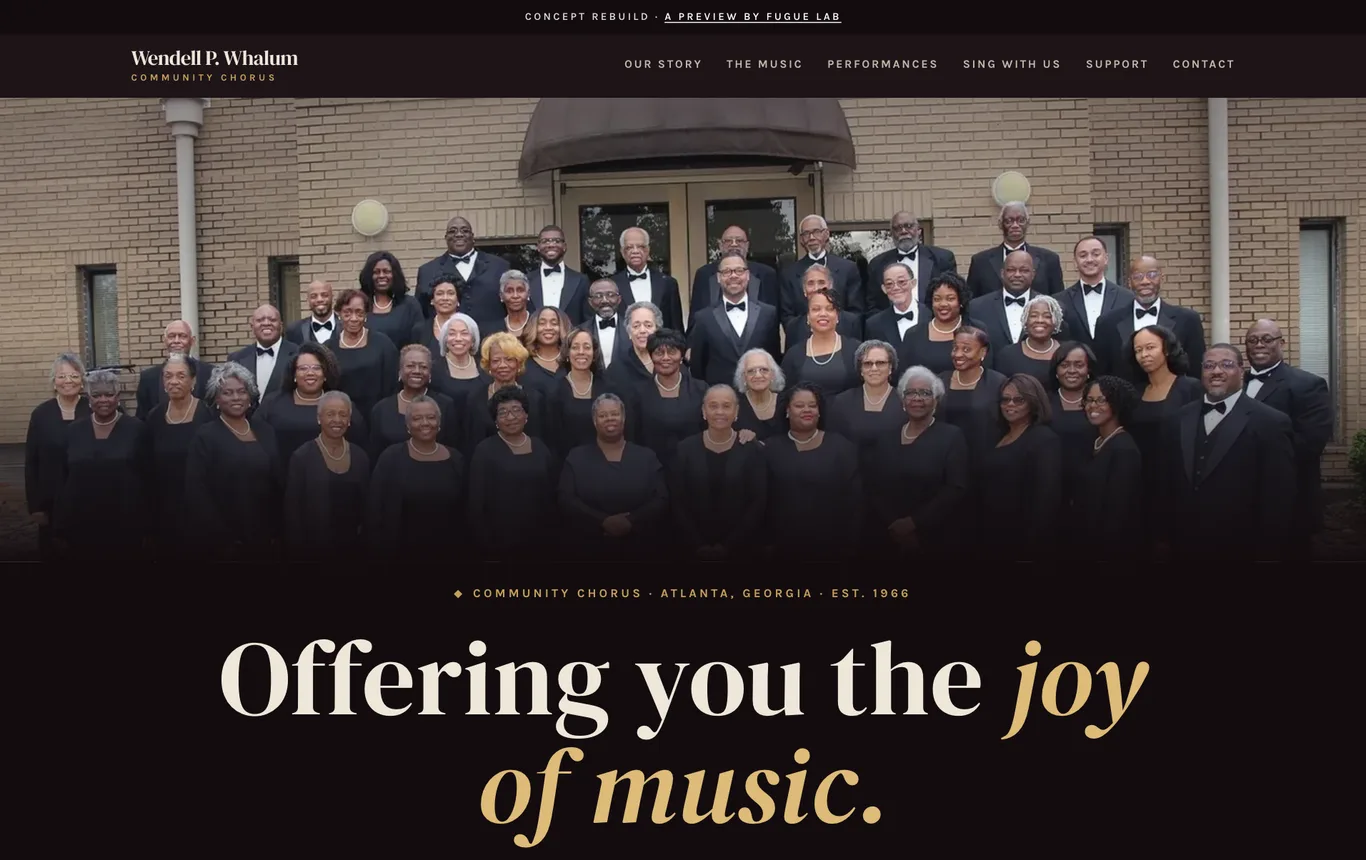 Rebuilt
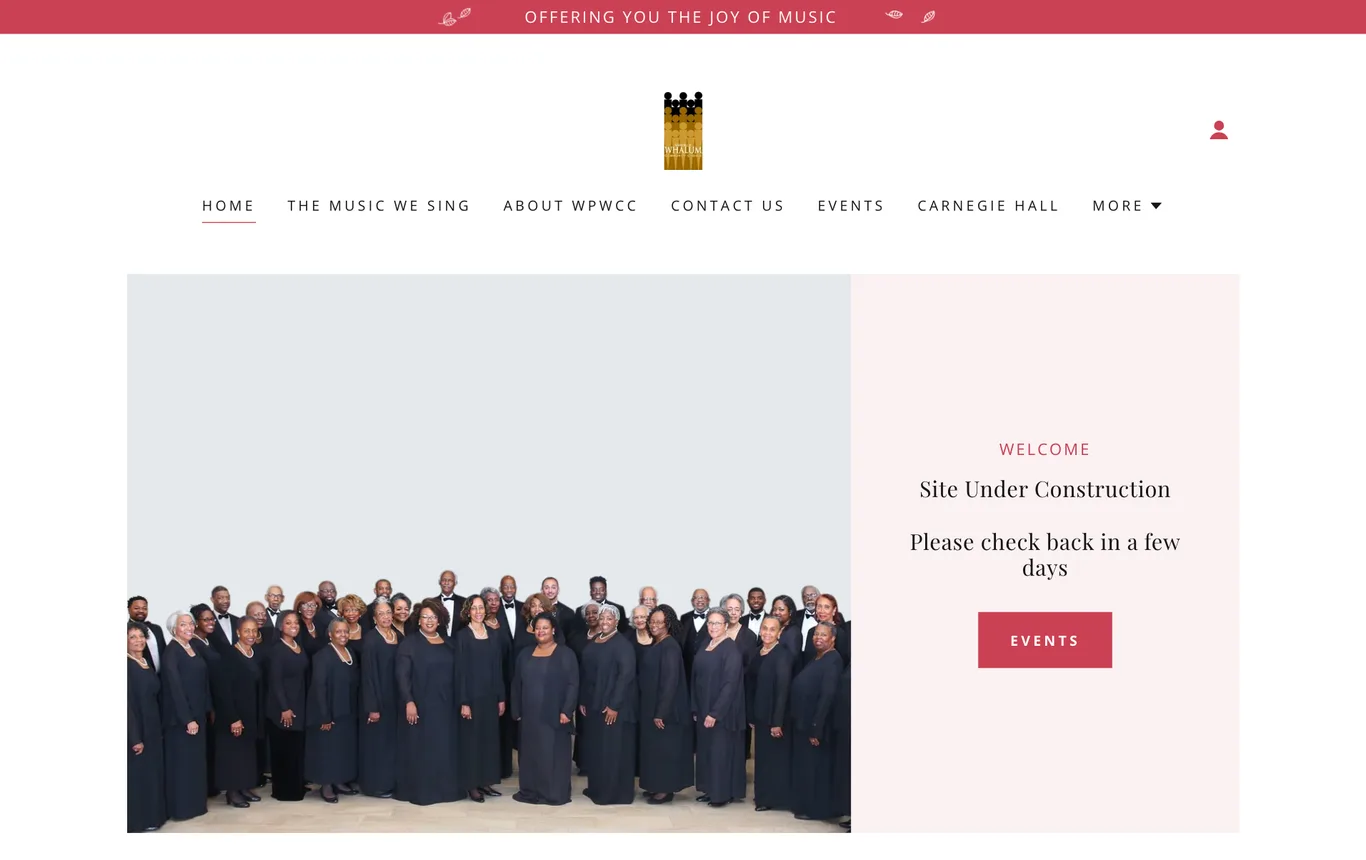 Under Construction
A Community Choir’s Website Has Two Jobs
The concerts are free, so the website is not a ticket page. It has two jobs: bring people into the seats, and bring the next singer onto the risers. For a chorus with sixty years behind it, the way you do both is the same: you let people feel the weight of the history the moment they arrive.
The Whalum Chorus has that history in abundance. Founded in 1966 at the Atlanta University Center and led today by Dr. David Morrow of the Morehouse College Glee Club, it sang at President Carter’s inauguration, for Nelson Mandela, in the 1996 Olympic Cultural Olympiad, and at Carnegie Hall. The trouble was that none of it was doing any work for them online.
What the Old Site Was Costing Them
The site ran on a generic GoDaddy template, and its homepage opened on a “Site Under Construction” notice telling visitors to check back in a few days. We graded it against The Full Score, our six-pillar standard. It came back a 58, an F. The gaps were not cosmetic:
- The homepage was a placeholder. Anyone who searched for the chorus, or followed a link to it, met a “check back in a few days” page and left.
- The remarkable history existed, but it was buried on an inner page behind that notice, so almost no visitor ever reached the story of Carter, Mandela, the Olympics, or Carnegie Hall.
- Measured the way a screen reader reads a page, the site scored 0 for accessibility, a blind or low-vision visitor got essentially nothing.
- There was no next concert to find and no clear way to sing with the chorus, so the two jobs the site existed to do went undone.
The Rebuild
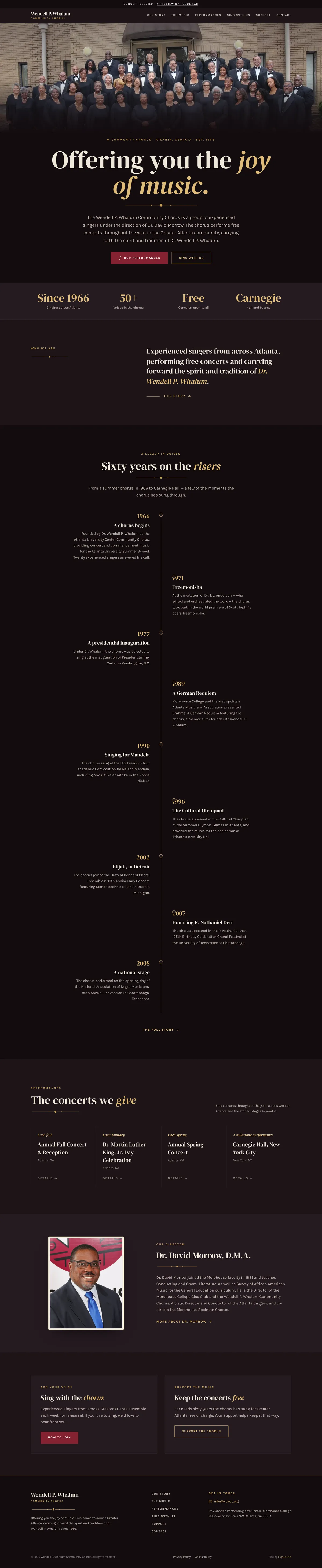
We kept every real fact (the founding, the director, the verbatim history) and rebuilt the experience around it. The design is a dark, dignified “heritage program”: a deep espresso and antique gold, a high-contrast serif, and a cinematic hero on the full chorus, with the chorus’s own line, offering you the joy of music, set in gold.
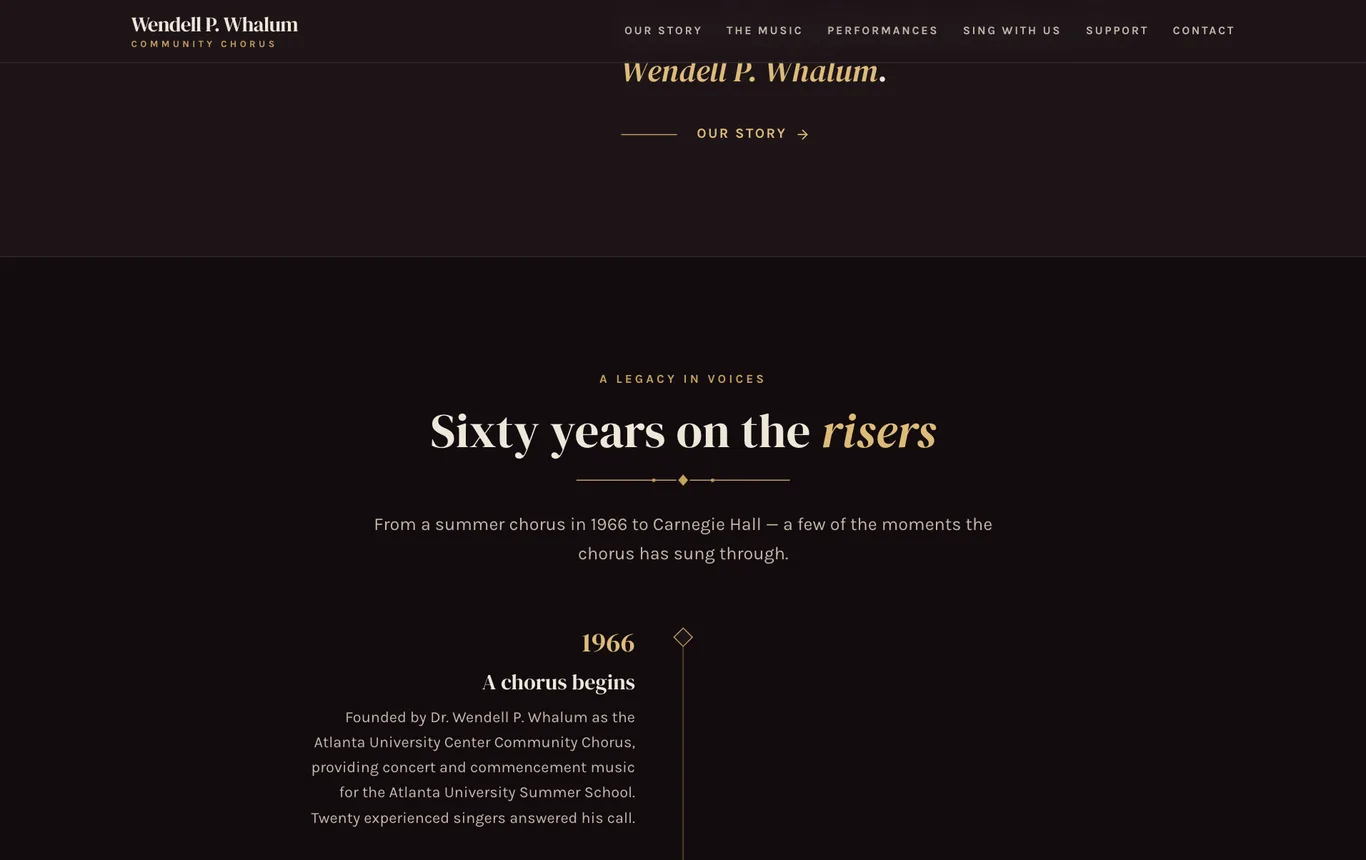
The centerpiece is a Heritage Timeline, a gold-spined chronology that carries a reader from the 1966 founding through Carter, Mandela, the Olympics, and Carnegie Hall. The thing that makes this chorus singular is now the first thing a visitor feels.
The Difference, Measured
We ran the rebuild back through the same Full Score checker. The site went from a 58 to a 98 , an F to an A, with accessibility, search, and the phone experience at or near perfect, and the history finally visible to anyone who lands on the page.
58 → 98
Full Score, an F to an A
0 → 100
Accessibility: from the floor to perfect
Placeholder → live
The front door shows the chorus again
We hold our own work to the same standard. The checker flagged a real contrast problem on our first pass (the lede over the photo was too faint) so we fixed it. That is the whole point of grading against a standard: it catches the gaps on our sites as readily as on anyone else’s.
What This Means for Your Choir
Most choirs are not short on history or talent. They are short on a website that shows it. The story that would make someone want to come, or want to sing, ends up on an inner page nobody reaches, behind a homepage that is dated or, worse, says the site is not ready yet.
The fix is not a new coat of paint. It is deciding what the site is for (filling the seats and the risers) and putting the thing that does that, your history and your music, on the front of the house. We grade honestly against a standard, fix the gaps that matter, and let the legacy be seen.
Want to See Your Own Full Score?
We grade your current site against the same six pillars and hand you the list of gaps, whether or not you ever hire us. If the gaps are worth fixing, we can rebuild it the way we did for the Whalum Chorus.
About the Author
Garrett John Law is a software engineer and musician who builds digital platforms for festivals, schools, and arts organizations. He’s an Interlochen alum and CIM graduate, and the founder of Fugue Lab, where he rebuilds the websites music organizations rely on to fill the room.